
The changing face of family violence
15th of May, 2026
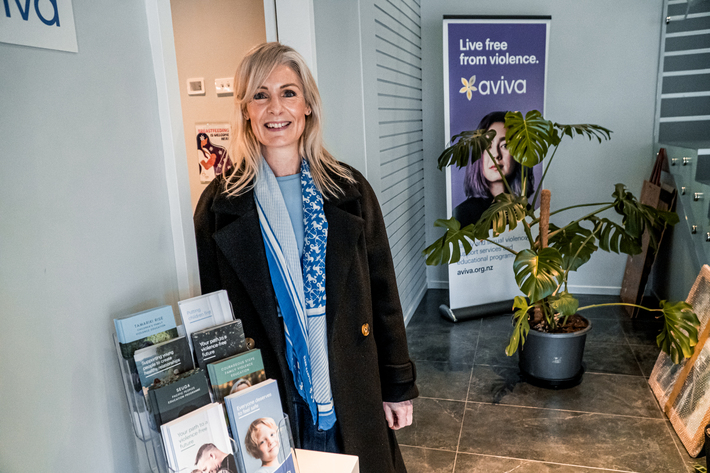
Aviva: seven years on
‘Supporting whānau in 2026 looks nothing like it did in 2019; people have so much more to deal with now.’
Having worked in the family violence sector for over a decade, Katie can attest to how significantly external pressures impact a family’s journey to recovery.
‘I left Aviva to work at Kainga Ora seven years ago; my role initially was working with property managers; not only do they see a lot of violence in homes, sometimes they’re the only people who can get into the home. Equipping them with the knowledge they need is vital. It was just an opportunity I couldn’t turn down.
‘I always knew I’d come back to Aviva; it feels like home to me, but I wanted to learn from seeing more of the sector.’
After seven years away, six at Kainga Ora and one at Oranga Tamariki (OT), Katie is finally “home”.
A new era of complexity
‘This work is my passion and when you love your job it doesn’t feel like work. I’m excited to come in every day.’ But, says Katie, the work is very different from how it was when she left Aviva.
‘I’m seeing different methods of abuse; digital abuse, in particular hacking phones and social media accounts, is huge in a way it just wasn’t years ago.’
As a result, Aviva and our partner organisations are under pressure with many closed to referrals or with long wait lists. But the most concerning issue Katie has noticed is Police response times.
‘Seven years ago, I could phone Police and get Protection Orders (PO) served immediately [once they’d been granted by a judge]. Now they can take weeks. It isn’t NZ Police’s fault; they don’t have the resources, but it leaves vulnerable people at more risk.’
Barriers to safety: the policing gap
Katie’s unique perspective paints a valuable side-by-side picture of the social landscape in 2019 vs. 2026. But what she describes is being felt by everyone. We spoke to kaimahi from across our services and the situation they describe is chilling.
Frontline family violence workers consistently report reduced Police capacity to respond to family violence. One kaimahi commented, ‘our safety planning has had to change from “get to a safe place to call Police” to “the Police may take a long time to show up, if at all, so think about how you can keep safe in the meantime”’.
This has a huge knock-on effect. Having a record of events from Police call outs is used as key evidence to support whai ora with protection order applications, OT investigations and other court proceedings.
In 2022, we shared the story of Molly*, for whom finding the courage to involve Police was a turning point.
‘I had always been fearful of going to the Police. Now I am able to report everything. Having the bravery to report and knowing how this could help me with my safety was huge. Even after the PO was served, he was still intimidating me and breaking into my home. But with him knowing that I was ready to ring the police and that they can arrest him based on the Protection Order stopped him from actively harassing me.’
Recently a client in a very similar situation to Molly, was advised by the Police to stop calling 105 because she was “taking up too much time,” despite active breaches of her Protection Order continuing.
Katie continues, ‘The other thing I’m seeing is the massive impact that the cost of living is having on families, especially fuel. There are people who say they just can’t afford the petrol to access services, like ours. People living in places like Ashburton don’t necessarily have family violence and sexual violence services locally. We always have travelled for clients who can’t drive, or get to us, but we’re not currently set up to drive to all of them.
‘And what happens when they can’t get their kids to school? For some children going through family violence, and poverty, school is so important for their safety and wellbeing.’
Signs of progress amidst the struggle
Has anything changed for the better? Yes, says Katie. Courts and judges have a far better understanding of the forms which family violence takes.
‘It was always really hard to get a without notice Protection Order in cases where a physical assault hadn’t taken place. Now they do issue them. That’s makes a huge difference.’
Societal and systemic understandings of family violence and sexual violence are evolving, even while some survivors still face challenges. Katie shared a story of a recent client, who sought help following a serious physical assault.
‘Her first experience with Police was really retraumatising. She was encouraged not to make a formal report and to essentially “let it go”’.
Katie contacted the Police directly and advocated on the woman’s behalf. With Katie’s support, she spoke to two different Police officers and made a formal statement.
‘Her experience that time was completely different. The officers were amazing, so validating, and took her seriously. They turned what had been a negative interaction into a positive one.’
So, despite immense challenges, there are reasons to hope – services like Aviva continue to adapt, supporting people facing new and unfamiliar struggles. Kaimahi like Katie embrace the challenge, and our supporters continue their support, showing that nothing – not even a shifts in Police focus, and a cost-of-living crisis – will stop them from showing up for families in need.
*Name changed for privacy & safety.