
Aviva's Submission on Move On Orders
8th of July, 2026
To the Justice Committee,
RE: Summary Offences (Move-on Orders) Amendment Bill
About us
Aviva is a family violence and sexual violence charity established over 50 years ago. Our vision is a violence-free Aotearoa. Until then, we work to support people to overcome its effects and make families and communities safer. We work with people of all ages, genders and experiences of violence. It is only by breaking the cycles of abuse and trauma, which have plagued generations, that we will create safe futures for tamariki, in a world where all children can reach their potential. Since being established in 1973, we have worked with over 44,000 people. In the last five years alone, we have worked with more than 8,000 individuals/whānau.
We oppose this Bill
Rough sleeping is not a chosen activity. Begging is not a chosen activity. Both are the consequence of New Zealand's worsening housing and income inadequacy, and both are listed grounds in the Bill on which a constable can issue a 24-hour move-on order.
In our opposition, we stand alongside other non-profits and institutions, who are experts in their field, many of whom have longer histories than we do, supporting vulnerable people. The Salvation Army's frontline experience teaches us that move-on powers don't solve homelessness; housing and support do.
We oppose this bill because:
- it criminalises homelessness
- it will impact survivors of family violence
- it will increase the risk of violence perpetrated towards unhoused people
- it will disproportionately impact Māori people
- it is incompatible with the New Zealand bill of rights
- it is a waste of Police resources, which are already stretched
- there are other solutions to homelessness, which have been proven to work
Criminalising homelessness
This Bill criminalises being homeless. It does so via a discretionary move-on power, applied to people aged 14 and over, on grounds that explicitly include rough sleeping and begging.
A power that can be used to remove a person from a public place for up to 24 hours - on the assessment of a single constable - is a significant power. The committee should not assume that adding the power will produce orderly use of it. The Crown already has the existing common-law and statutory powers to address actual disorderly conduct; the case for adding a further discretionary power, with the grounds the Attorney-General has flagged, has not been made out in the explanatory note or in any of the supporting material the committee has been given.
That the Bill applies to anyone aged 14 or over adds an additional layer of cruelty. A disproportionate number of young people sleeping rough are doing so because their home is not safe. 14–17-year-olds (especially those under 16) have very few legal options available for survival. Their wellbeing depends on having safe homes and safe adults. If they’re living on the streets, they have already been failed by every social, structural and political safeguard. Treating survival as criminality creates a direct pathway into the criminal justice system for youth. This seems particularly galling for an administration who stood on a platform of “reducing youth crime”.
Impact on survivors of violence
Family violence is one of the leading causes of homelessness, particularly for women and tamariki.
Even in cases where the user of violence is the person who has nowhere else to go, this Bill still makes victims less safe; people experiencing harm are even less likely to take steps towards having the violent person removed from the home, if they know the heightened risk they will face on the street.
A 2024 survey by Women’s Refuge NZ found, of the 1,707 respondents:
- 60.3% had to move house because of the violence
- 40.4% had difficulty getting, keeping, or moving forwards in their job because of the violence
- 30.6% had difficulty finding permanent and affordable housing
- 20.1% had to stay in emergency or transitional housing
What this data demonstrates is how family violence can cause profound instability in the lives of survivors (and their children), and this often directly impacts their ability to attain stable housing.
Increased risk of further violence
As an organisation committed to breaking cycles of violence, we are duty-bound to oppose a bill which will undoubtedly put vulnerable people more at risk.
This legislation could put unhoused people at increased risk of all forms of violence. We know that violence often takes place in the shadows. Forcing homeless people into less visible areas, increases their risk of being further victimised. A 2025 Study by Wellington City Council found many women choose public places as this visibility can help to reduce their risk of sexual harassment or sexual violence. [i]
Impact on Māori
This legislation will, once again, disproportionately affect Tangata Whenua. If the crown truly takes its Treaty obligations seriously, this should be unconscionable. We are still living with the legacy of colonisation. Over 150 years of colonial policies have marginalised Māori communities, leading to economic and social disparities, resulting in their overrepresentation in the unhoused population[ii]. This alone means that Māori will be over-represented in any the downstream effects of any legislation relating to homelessness. However, this effect will be compounded by other factors, not least Māori people’s overrepresentation in the justice system.
The Crown has been told in detail, through the Understanding Policing Delivery (UPD) research programme[iii], how discretionary police powers are currently exercised in Aotearoa: with documented disproportionate effect on Māori, including an 11% higher prosecution rate for Māori than NZ Europeans for the same offence. A government that adds a new discretionary power on top of that finding, without addressing the underlying problem, is choosing to widen a gap it has been formally told exists. The committee should require, as a minimum precondition for any move-on power, that the existing recommendations on the equitable exercise of discretionary police powers are first implemented and audited.
New Zealand Bill of Rights
Attorney-General Chris Bishop has filed a section 7 report under the New Zealand Bill of Rights Act 1990, advising Parliament that the Bill is inconsistent with the Bill of Rights in part. A section 7 report is not procedural noise. It is the Crown's senior law officer telling Parliament, on the record, that the Bill as drafted cannot be justified as a reasonable limit on a fundamental right. Bills that proceed in the face of a section 7 report are extraordinary and should be exceptional.
The New Zealand Council for Civil Liberties has characterised the Bill as an overreaction. Their analysis is the cleanest civil-liberties argument against it: the Crown already has the common-law and statutory powers it needs to address actual disorderly conduct; this Bill is not a response to a documented enforcement gap, it is a discretionary power being created without a demonstrated need for it. This bill fails to make the case that existing laws are insufficient.
Adding strain to Police resources
Sector advocates have already raised concerns about the operational strain the Bill could place on frontline police, potentially drawing resources away from urgent family harm and sexual violence callouts. Working in the sector, we can attest to the impact that limited Police resources are already having. Kaimahi report reduced police response to family violence callouts, protection order breaches, and safety concerns. Police resources also impact sexual violence survivors. Following an initial interview, it can take a year for the case to even be allocated to an investigator. Then the investigation typically takes another year and up to 18-24 months in the court system.
Enforcing move-on orders—which involves monitoring low-level public disruptions, issuing directives, managing the proposed 2-hour detention window for gathering biographical details, and processing non-compliance charges—takes significant administrative and physical police hours. Dedicating valuable resource hours to managing minor public spaces risks worsening response times for family-violence emergencies or delaying the vital service and enforcement of protection orders, where immediate police intervention can be a matter of life or death.
Survivors of family violence and sexual violence – and those of us who work them – desperately need Police resources directed towards better outcomes for people who have been harmed. Not only will this legislation achieve the opposite, it also risks creating more victims.
This is not a solution
The Queensland experience with comparable move-on powers (including the QPILCH 2009 submission to Brisbane City Council[iv]) showed displacement, not reduction, of disorder. Further, more recent sector analysis by the University of Auckland highlights that even internal feedback provided to ministers by the Police themselves warned that law enforcement "was not an effective way to deal with homelessness or poverty."[v]
The Salvation Army has put on record that move-on powers do not solve homelessness - that investment in housing and support is what does. Their position, from a frontline housing and social services provider with decades of work in this space, is that criminalising the visible symptoms of housing failure displaces people from one street to another without addressing the housing shortage, the mental health system, or the social support gap that produces street homelessness in the first place.
There are two policy directions on offer in response to street homelessness: criminalise the visible symptom, or invest in housing and support to address the underlying cause. This Bill chooses the first. ActionStation, Manaaki Rangatahi, the Salvation Army and the Science Media Centre expert panel all argue for the second. The committee should weigh the constructive direction from frontline housing and homelessness organisations against the operational case the Crown has presented for the new power.
The Bill treats the visible symptoms of poverty as the problem to be solved. They are not the problem. They are the evidence of the problem. Removing the evidence from sight does not reduce poverty. Aotearoa New Zealand has an opportunity to invest in evidence-based solutions, which are grounded in decency and a basic belief that all people have a right to safety and dignity. There are models from all over the world which could be adopted. Finland and Norway both have populations comparable to New Zealand (both slightly higher) and have had enormous success with the Housing First model. Social problems are solved when governments choose to invest in solving them. The barrier is not economic; it is values based. Whether or not it passes demonstrates who, and what, New Zealand stands for.
Recommendations:
The Bill should not proceed.
- The committee should hear directly from frontline homelessness services - the Salvation Army, Lifewise, city missions, Manaaki Rangatahi and others - on what works to reduce street homelessness in Aotearoa, and weigh their evidence on the record.
- The Government should progress the statutory Duty to Assist framework proposed by ActionStation and supported by frontline homelessness providers as the policy response to street homelessness, in place of move-on powers. Move-on powers are not a tool for addressing homelessness - they displace people, not housing inadequacy.
- The grounds for issuing a move-on order should never include rough sleeping or begging - the grounds the Attorney-General has identified as inconsistent with the New Zealand Bill of Rights Act 1990. There is no version of a move-on power on those grounds that this committee should accept.
- The committee should learn from what has come before:
- Aotearoa does not need to repeat the Queensland “experiment”
- We can look to other models for solutions which are truly effective
Learn more about the Summary Offenses (Move On) Amendment Bill on New Zealand Parliament's website.
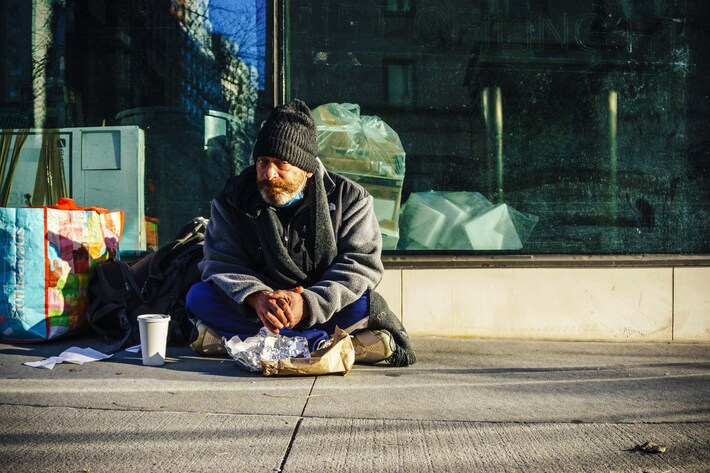
Image from Clay LeConey on Unsplash.
[i] Wehipeihana, N. and Poutama, M. (2025). Understanding Homelessness: Wāhine Māori Experiences of Rough Sleeping in Wellington City and their Safety Needs. Wellington: Wellington City Council
[ii] housingfirst.co.nz
[iii] Research | New Zealand Police
[iv] Homeless Persons' Legal Clinic submission
[v] Tearing down the housing then punishing homelessness – University of Auckland